Mrs. Black-whiskers Grey
 April 2, 2009
 I'm working on a book called How Will I Behave today (and the Rest of My Life?). My book is based on a Confucian classic that teaches children how to behave respectfully. Called Guidelines for Being a Good Person, it was taught by memorization of the 1080 Chinese characters.
Since the English translation is considerably longer, I'm using the time-tested treatment of stories to help kids learn the 113 principles.
This project is a bit ironic actually. Since I read the original translation and explanation in 2003, I have been saying, "This will never fly in the West." About a month ago, due to a misunderstanding, I volunteered to do a version designed for a western market. Immediately after I made a commitment to do this to my Teacher and he approved the project, I found out it had all been a misunderstanding. But I was already on the hook. (Perhaps there should have been a 114th principle: investigate carefully before opening your mouth. ;-))
Anyhow, understanding karma, I do realize I am supposed to be working on a children's book. For a person who answers the question "How old is the child" with "About this tall," my working on a children's book is rather a challenge. That said, I must admit writing stories is really fun. Hopefully, the kids who read the book will think reading them is fun also. Fortunately, I have an editor who is proving quite adept at regressing to the level of an eight or ten year-old child.
Without further ado, for those of you who have young children or who simply like stories here is the first story and the guidelines from Guidelines for Being a Good Person that it goes with.
You should keep to a regular routine.
You should not be constantly changing your mind.
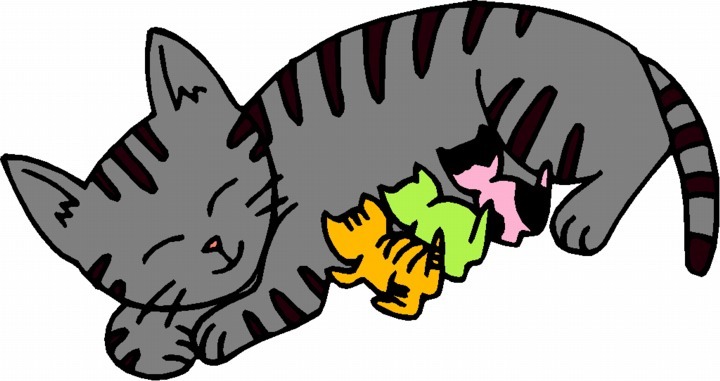 Mrs. Black-whiskers Gray lived in a barn with her three little kittens. One was an orange tabby, one was solid green, and one pink with black spots. All three had their mother’s beautiful pink nose and sweet smile.
The three little kittens were very happy in the barn, which was filled with freshly cut hay that smelled so sweet and fresh. The hay provided many secret hiding places in which to play. Their mother took care of them and taught them what they needed to know to live safely in the world. She told them about the house she visited every morning and taught them about the other animals that lived on the farm.
One day, Mrs. Black-whiskers Gray returned to the barn and told them she had found a better home. Before they knew what was happening, she took them one by one to their new home: a big basket with lots of clothes in it that was on the back porch of the house. But that night there was a terrible storm with wind and thunder and lightning.
The kittens cried all night long and the next morning their mother told them she was so very sorry for taking them away from the barn. When the sun came out and all the puddles had dried up, she quickly carried them back, one by one, to the barn.
Then after several days, she came into the barn and told them excitedly that she had really found a better home this time. This time she took them to the shed where the chickens lived. She told her three kittens they would have fun playing with the baby chicks.
But that night when all the chickens came in to go to sleep there were so many of them that there was no space left for the three little kittens to lie down. All that was left was an old and very lumpy egg carton. They were very uncomfortable and cold in it and cried unhappily to their mother. Exhausted, they finally fell asleep.
The next day their mother again carried them, one by one, back to the barn. She apologized and said she wouldn’t change her mind again about where they would live.
But only a week had past when Mrs. Black-whiskers Gray came running in to the barn excited again. Being a little older and a lot wiser now, Orange Tabby looked at Green and Green looked at Pink. You could tell they were all nervous. Their mother said this time she had found a very special home and she was sure they’d love it. Being very dutiful, they didn’t protest. So again she carried them, one by one, this time to the back seat of an old car that wasn’t used any more.
But that night the family’s big, black and white dog jumped into the front seat and even though he smiled (as much as he could) and gently assured the little kittens that he wouldn’t hurt them, they were still scared because he was so big and seemed to fill the entire front seat. They huddled together and shook in terror until they finally fell asleep under the watchful eye of their mother who stayed awake all night thinking.
The next morning, she explained that they were her first kittens so she was still learning how to be a good parent. She now knew that that making many changes without good planning and careful thought could cause serious problems.
Then she carried them, one by one, back to the cozy corner in the hay barn where they had been so happy and safe and comfortable.
And never again did Mrs. Black-whiskers Gray casually change her mind.
Moral
Constantly changing our minds without careful thought
can create much trouble.